Author: Ben Sneesby Read time: 13 min
Why Is the Neumann M7 Capsule Legendary?
Developed during Neumann’s formative early era, the M7 capsule became one of the most influential large-diaphragm condenser designs in recording history.
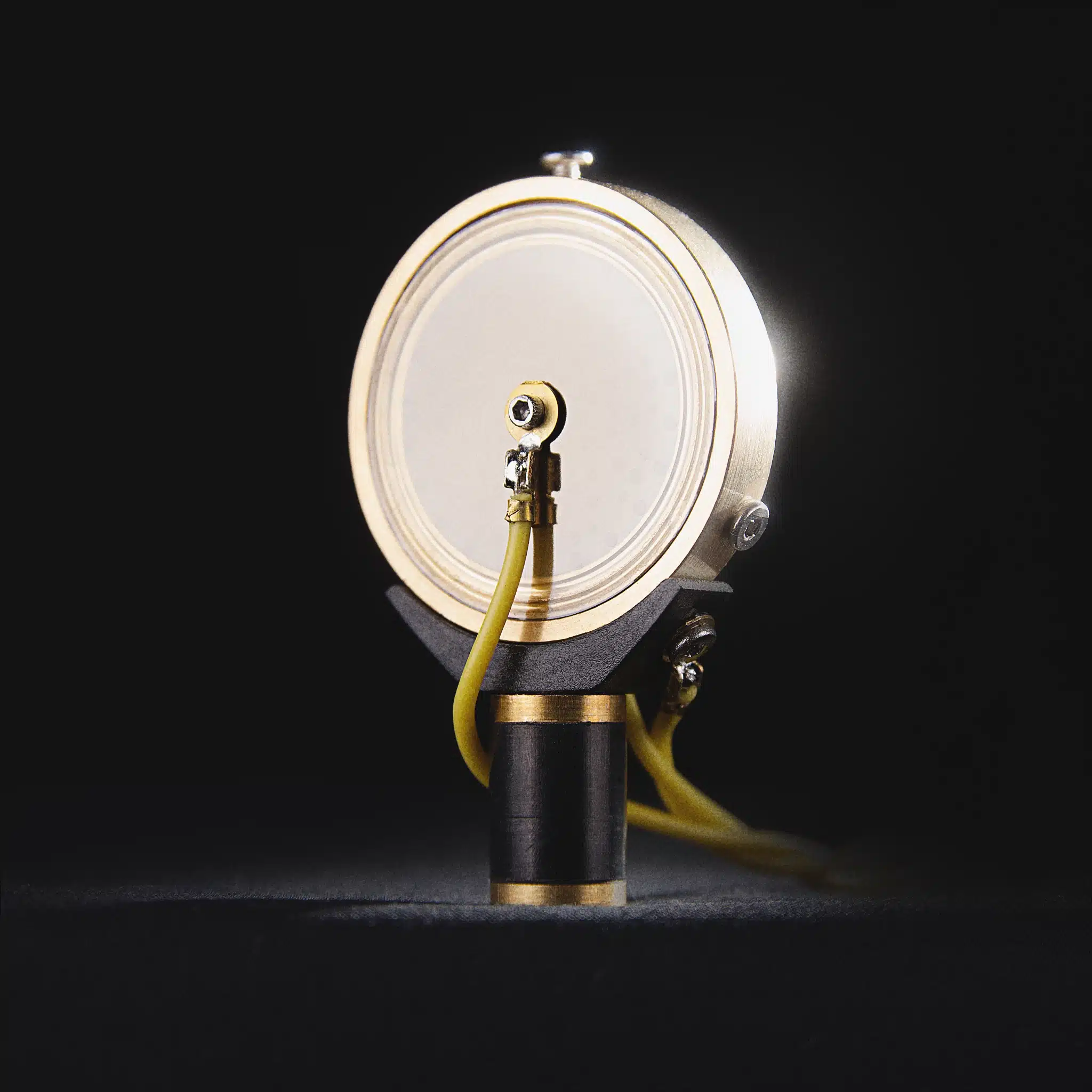
The Neumann M7 capsule is legendary because it became closely associated with some of the most influential microphones in recording history, particularly the U 47 and M 49. Developed during Neumann’s formative years, the M7 helped establish a studio sound associated with intimate vocals, natural speech and realistic recording. Its historical influence continues through modern microphone restorations, recreations and new designs inspired by the classic Neumann era.

Where Did the M7 Capsule Come From?
The M7 belongs to the early period of large-diaphragm condenser microphone development. Neumann was founded in Berlin in 1928 by Georg Neumann, whose work helped establish the company as one of the defining names in professional studio microphones.
Neumann’s early microphones were important because they offered recording engineers a level of sensitivity, detail and control that was not available from many earlier microphone technologies.
The M7 emerged from this period of rapid development. Although historical descriptions and capsule naming conventions can vary, the M7 became recognised as one of the important large-diaphragm capsule designs connected with Neumann’s classic tube microphones.
Its significance was not simply that it was a technically advanced capsule. The M7 became important because it was used in microphones that went on to shape the sound of professional recording.
How Did the M7 Become Associated with Neumann’s Classic Microphones?
The M7’s historical reputation grew through its connection with several important Neumann microphones. Most notably, it became associated with the U 47 and M 49, two microphones that became highly influential in studios, broadcast facilities and recording rooms around the world.
The Neumann U 47 was introduced as a switchable-pattern condenser microphone. Neumann describes it as the company’s first switchable-pattern condenser and identifies it as one of the most important microphones in its product history.
The M 49 followed as a remotely switchable studio microphone. Neumann states that the M 49 used the same large-diaphragm capsule as the U 47 and became one of the most sought-after tube microphones of its era.
As these microphones became associated with major vocal, speech and orchestral recordings, the capsule inside them became part of their legend. Engineers began to seek not only the complete vintage microphones, but also replacement capsules and modern designs capable of capturing some of the same historical character.
What Role Did the M7 Play in the U 47?
The M7 is closely associated with early U 47 microphones and is an important part of the microphone’s historical story.
The U 47 was significant because it combined a large-diaphragm condenser capsule with tube electronics and selectable polar patterns. This gave engineers a microphone that could be adapted to different recording situations while providing a detailed and powerful sound.
The U 47 became particularly respected for vocal recording. Its reputation was linked to a combination of factors:
- The large-diaphragm capsule
- The microphone’s tube circuit
- Its transformer and output stage
- The headbasket and acoustic design
- Its selectable polar patterns
- The placement and recording techniques used by engineers
For this reason, it is important not to describe the M7 as solely responsible for the complete U 47 sound. The capsule was a central component, but the famous result came from the microphone as a complete electroacoustic system.
Nevertheless, the M7 became inseparable from the historical identity of early U 47 microphones. When engineers refer to the classic U 47 sound, they are often referring to the interaction between the M7-style capsule, the original circuit and the rest of the microphone design.
How Was the M7 Used in the M 49?
The M7 also became closely associated with the Neumann M 49.
The M 49 was important because it allowed the microphone’s polar pattern to be changed remotely. Neumann describes it as the first studio microphone with a continuously variable directional pattern.
This made the M 49 particularly useful in professional recording environments. Engineers could alter the microphone’s directional behaviour from the power supply without physically reaching up to the microphone. The same large-diaphragm capsule family used in the U 47 helped give the M 49 its place in recording history.
The M7’s association with both microphones strengthened its reputation. It was no longer connected to one famous microphone alone. Instead, it became part of a wider family of classic German tube microphones that influenced the sound and working methods of professional studios.
Why Was the U 48 Also Historically Important?
The Neumann U 48 was a special variant of the U 47. The U 48 is relevant to the M7’s history because it demonstrates how related capsule and circuit technologies could be adapted for different microphone designs and recording requirements.
Although the U 47 is generally the more famous model, the U 48 has its own historical importance. It became valued for its different pattern combination and remains an important part of the classic Neumann microphone family.
Why Are Original M7 Capsules Historically Important?
Original M7 capsules are historically important because they are connected to a period when large-diaphragm tube microphones were becoming central tools in professional recording.
They also represent a particular stage in capsule manufacturing. Early M7 capsules used PVC film as the diaphragm material. Over many decades, original capsules may be affected by age, environmental conditions, contamination or changes in diaphragm tension.
This makes surviving original examples especially valuable to restorers, collectors and engineers interested in preserving historically important microphones.
A vintage capsule should not automatically be assumed to be in perfect condition simply because it is original. Age, storage conditions and previous servicing can all affect performance. In some cases, a carefully made replacement capsule may provide a more reliable way to return a historic microphone to working condition while preserving its intended character.
How Did Later Capsule Designs Relate to the M7?
Later Neumann capsule designs were not simply copies of the M7. They reflected different engineering priorities and were developed for different microphone families.
Some later capsule designs aimed to provide:
- Greater consistency between capsules
- Improved durability
- Lower noise
- More predictable polar-pattern performance
- Better suitability for mass production
- Compatibility with newer tube or solid-state circuits
The names used for historic capsules can sometimes create confusion. “M7,” “K47” and other capsule designations are often used to describe related historical families, modern recreations or capsules intended for microphones inspired by classic designs. These names should not always be treated as proof that two capsules are completely identical.
The history is also complicated by the fact that original microphones changed during their production lives. Different examples of the same microphone model may contain different capsule versions or later replacement parts.
Why Does the M7 Still Influence Modern Microphone Design?
The M7 continues to influence microphone design because its historical associations remain powerful.
Engineers still value the classic microphone qualities connected with the M7 era:
- Intimate vocal capture
- A strong and natural midrange
- Realistic speech reproduction
- A sense of depth and proximity
- Smooth presentation without an overly aggressive top end
- Useful performance on vocals, voice and acoustic instruments
These qualities are not produced by the capsule alone. Modern microphones inspired by the M7 may use different diaphragm materials, manufacturing methods, electronics, transformers and headbasket designs. As a result, two microphones described as M7-style microphones may sound noticeably different.
Modern capsule manufacturers also have access to manufacturing methods that were not available in the same form during the original production era. This can improve repeatability and make it possible to produce replacement or tribute capsules for restoration, DIY and new microphone projects.
The goal is not necessarily to duplicate every aspect of a particular vintage capsule. In many cases, the goal is to preserve the musical qualities associated with the original design while improving consistency and long-term reliability.
Common Misunderstandings About the M7’s History
The M7 capsule created the entire U 47 sound
The M7 was an important component, but the U 47’s sound also depended on its tube, transformer, headbasket, power supply and overall acoustic design.
Every original M7 capsule was identical
Historic capsule production was subject to manufacturing variation, servicing and ageing. Different examples may not perform in exactly the same way.
Every microphone labelled “M7” uses the same design
The term M7 may refer to an original historical capsule, a modern replacement, a tribute design or a capsule intended for a particular microphone circuit. The name alone does not establish that all examples are identical.
A vintage capsule is always better than a modern replacement
An original capsule has historical value, but it may also have suffered from age-related deterioration. A modern replacement may offer improved consistency and reliability, depending on the restoration goal.
Summary
The Neumann M7 capsule is legendary because it became part of the history of microphones that transformed professional recording. Its close association with the U 47 and M 49 helped establish its reputation among engineers, musicians, collectors and microphone builders.
The M7’s importance is not based on one specification or one tonal description. Its legacy comes from the combination of capsule design, microphone engineering, influential recordings and decades of practical studio use. Although later Neumann microphones introduced new capsule families and technologies, the M7 remains an important reference point in the history of large-diaphragm condenser microphones.
Frequently Asked Questions
Related Learning Centre Articles

Discover how gold and aluminium diaphragm coatings are used in classic and modern condenser microphone capsules and why the complete capsule design matters more than the metal alone.

Designed for the legendary U 87 in the late 1960s, the Neumann K87 capsule brought versatile multi-pattern performance, low noise, and signature warmth to modern studio recording.

Introduced in the 1960s for the legendary U 67, the Neumann K67 dual-diaphragm capsule set the benchmark for modern studio clarity, warmth, and articulate detail.

Bridging vintage warmth and modern durability, the Neumann K47 capsule defined vocal recording history—and remains a studio staple for intimate, authoritative tone.
Related Products


BU47
AUD $7,020.00


Arabella
AUD $3,720.00


-
BU47
AUD $7,020.00
-
Arabella
AUD $3,720.00


M7 Capsule
AUD $490.00
-
M7 Capsule – Cardioid
AUD $360.00